Creating the Engine of Scientific Discovery
For four centuries the scientific method has been executed by humans, with machines in a supporting role. We are now approaching a threshold at which AI systems can themselves formulate hypotheses, design experiments, and iterate on results — continuously, at a pace no human team can match. The Nobel Turing Challenge framed this as a concrete goal: AI capable of making major scientific discoveries worthy of the highest recognition. What once read as provocation is beginning to read as a roadmap — a warp-drive for scientific discovery.
In this keynote, Dr. Hiroaki Kitano examines what it will take to build such an engine. The talk looks at the convergence now underway between foundation models, autonomous robotic laboratories, and the vast knowledge graphs of prior science, and at the deeper questions it raises: how hypotheses are chosen when machines generate millions of them, how discoveries are validated when no human has followed every step, and how the institutions of science adapt to collaborators that never sleep. The coming decade will not simply accelerate science; it will bend its timescale.
- Archive
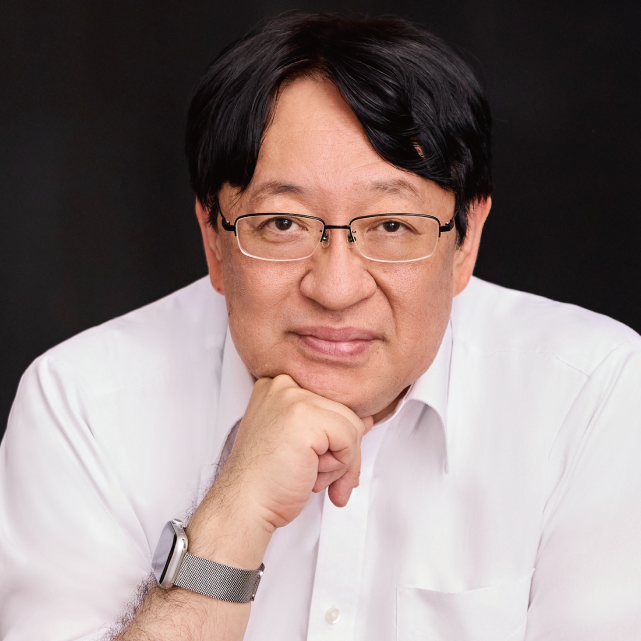
Sony Computer Science Laboratories Inc. President & CEO
Okinawa Institute of Science and Technology Graduate School Professor
Hiroaki Kitano